Making room for reading when your child likes screens
Choose a reading routine that fits your family, with practical options for paper books, digital comics and sharing a device.

Reading a comic and playing a game can happen on the same tablet. That makes “put the screen away and read” an awkward instruction when the next story is on the device too.
What would suit this moment?
Time away from devices
Keep a paper book, magazine or comic within reach.
A story on the tablet
Open a digital story together and agree where you’ll stop.
Keep your family’s usual arrangement for games, whichever reading option you choose.
Have a story ready when there's time
Think of a moment you already have: waiting for a sibling to finish a class, or sitting down after school. Put a book in the bag or beside the sofa so it's there when you need it.
For digital reading, open the story before handing over the device. That saves the reading time from being spent looking through apps. If the tablet is shared, agree when the next person needs it.
Start with a few pages. You can keep going when there's time and the story has caught your child's attention.
Offer something they might choose
“Would you like the animal book or the comic?” gives your child a place to start. On a device, you could offer two stories you've already opened. Include familiar favourites as well as something new.
If neither appeals, find out what they'd rather read. The subject or the drawings may matter more to them than the format. Look at the pages together before deciding whether the format suits them.
Agree where to stop
With a digital story, choose a stopping point before you begin: the end of the story or a chapter you have time to finish. Save your place if you stop earlier.
If your child wants to open a game afterwards, return to the arrangement your family already has for games. It helps to settle that before handing over a device used for both.
A paper book needs a place to wait too. Leave it within reach with a bookmark, ready for the next few pages.
Read together when they want company
Take a character each and read the dialogue aloud, or let your child follow the pictures while you read. A funny panel can be worth lingering over. You don't have to turn it into a question before carrying on.
Sometimes your child will want help; sometimes they'll want to read alone. Let the story and their mood guide how much you join in.
Keep both options within reach
You can try a Comic Scoop story online when you're sharing a device. Keep a library book, magazine or paper comic handy for the times you want to put it away.
Having something ready makes the next invitation simple: there's a story waiting whenever you have a few minutes to read.
More from the blog
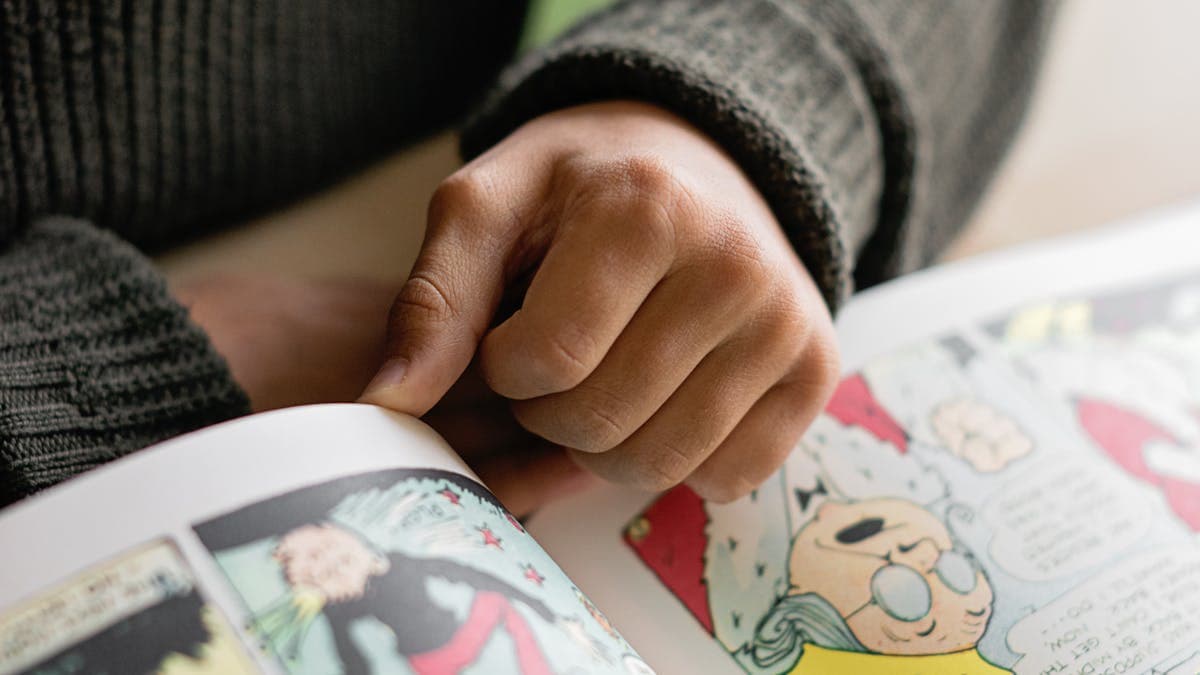
Does reading comics count as reading?
Why reading comics counts: how children follow dialogue, interpret pictures and connect panels, plus what to look for when choosing a comic.

How to talk about current affairs with primary-school kids in Singapore
How to choose a news story, explain unfamiliar details and make room for your child’s questions, including when a headline worries them.