Does reading comics count as reading?
Why reading comics counts: how children follow dialogue, interpret pictures and connect panels, plus what to look for when choosing a comic.
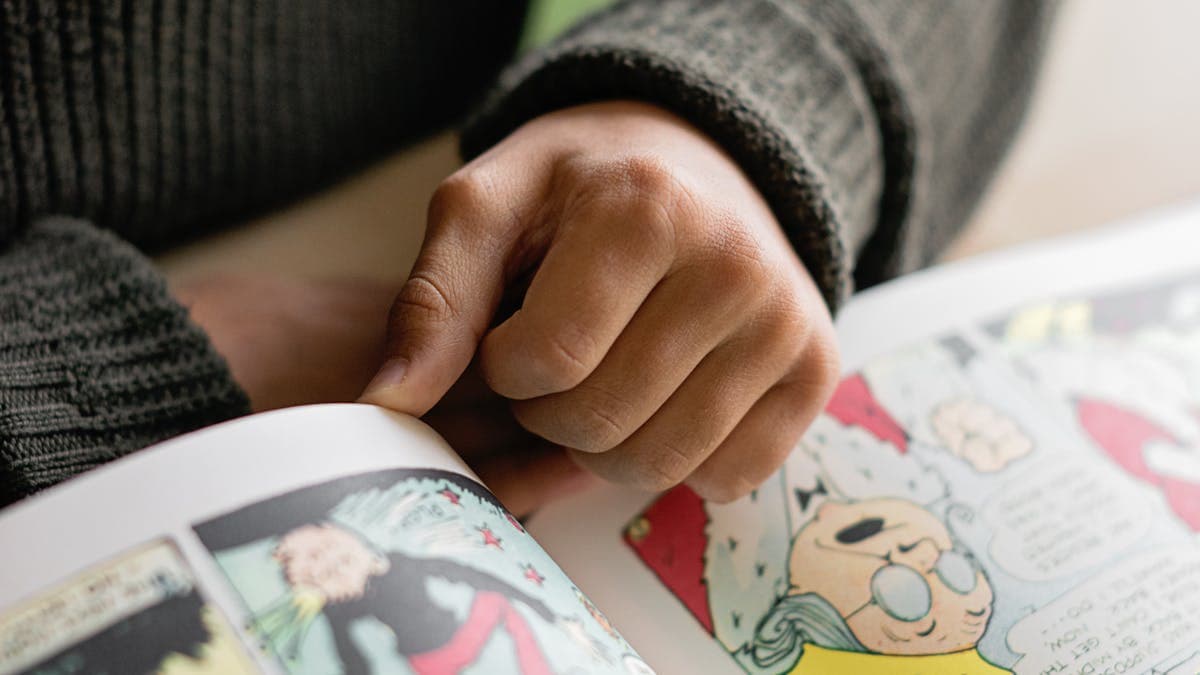
Yes, reading comics counts as reading. The words carry part of the story; the reader also has to notice expressions, follow the panels and work out what happens between them. A page with little text can ask quite a lot of its reader.
What happens between the panels?
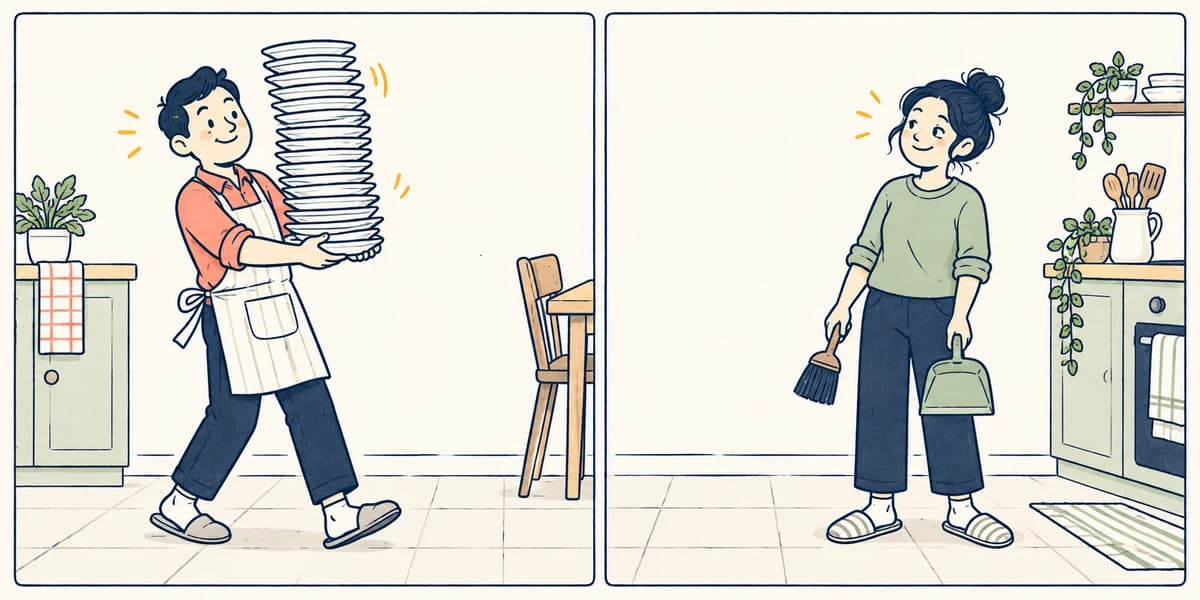
The reader works out that the plates fell in the gap between those moments. The confident line becomes a joke once the dustpan appears. Understanding it means bringing the dialogue and the drawings together.
Comics use that relationship throughout a story. A character can say one thing while their expression suggests another. A large sound effect can interrupt a conversation. The size and order of panels can make a moment feel quick or drawn out.
Reading Rockets' guide to graphic novels describes how images and text work together to carry a narrative, and includes suggestions for young readers.
A shorter page can still contain challenging language
A speech bubble may introduce an unfamiliar word without a long paragraph around it. The nearby dialogue and drawing can help the reader make sense of it.
In our welcome comic, “debuted” appears alongside a definition. A child can read it as “appeared for the first time” and carry on with the scene. In another story, a word might need an explanation from an adult or a dictionary.
Page design matters too. A crowded page with small lettering and an unusual panel order can be harder to follow than a spacious one. A glance at the cover won't tell you that. Open a few pages and follow an exchange to see how comfortably the words and pictures fit together.
Comics can stay on the bookshelf
A child doesn't have to give up comics when they begin reading chapter books. The formats offer different experiences: a novel can spend a page inside a character's thoughts, while a comic can let a glance do some of that work.
Offer variety through subjects they already enjoy. A child reading an animal comic might also want a wildlife book; a keen joke reader might try funny poems. They can keep returning to a favourite comic as well.
Choose a story they want to continue
Let your child browse a few pages. They might be drawn to the artwork, the humour or the subject. If they need help getting started, take a character each and read the dialogue aloud together.
Look at the reading level, page layout and first few pages together. If reading is persistently difficult or upsetting, their teacher can help you choose support alongside enjoyable books.
More from the blog
How to talk about current affairs with primary-school kids in Singapore
How to choose a news story, explain unfamiliar details and make room for your child’s questions, including when a headline worries them.
Making room for reading when your child likes screens
Choose a reading routine that fits your family, with practical options for paper books, digital comics and sharing a device.